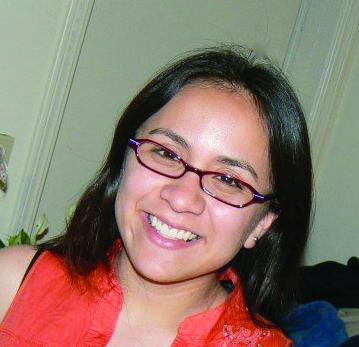
Alumna
Alumna
- University of California, Davis, B.S. Biotechnology- Microbial emphasis. Minor in Comparative Literature
microbial ecology, microbial ecosystem services, green chemistry, science and society, access to research
The reason I sought out a Ph.D. was to obtain the training of a researcher as well as the knowledge and skills to engage different scientific disciplines and build bridges between our local community and academic researchers.
My research interests are diverse: from patterns and circadian-like rhythms in microbial communities, the use of metagenomics and proteomics to study and analyze microbial communities, and how microbial ecology can contribute to the field of Green Chemistry.
I am also very interested in better connecting local communities to students searching for research opportunities. Access to science and research often dictates who has a voice in policy and societal decision-making processes. Community members and organizations tend to have a very minor role in setting the research agenda, yet it is evident that the community’s voice is necessary for effective and sustainable scientific solutions to pressing environmental issues.
I am interested in bridging disciplines and creating avenues that allow knowledge generated by scientific pursuits to be placed and used in a social, cultural and economic context. Hence, my work at Berkeley was divided into two main areas, microbial ecology and building bridges between the University and communities.
1 ) Periodicity and circadian-like rhythms of microbial communities in hypersaline ecosystems
The diel cycle (day and night) is one of the most conspicuous features of life at and near the Earth’s surface. This enduring cycle has played a central role in the environmental space that most biological systems on Earth have evolved in. Most importantly, biologically relevant environmental changes in factors such as light, temperature and oxygen, occur in a nonrandom, often temporally coupled fashion. Being able to anticipate the temporal interrelationships among changes in environmental factors and to prepare a response allows the organism to function optimally in a defined environmental space.
Circadian rhythms are a well-studied example of this behavior. A circadian rhythm is an endogenous, physiological rhythms which: (a) oscillates with a period that is close to, but not exactly, 24 hours in duration, (b) is temperature compensated, signifying that it runs at nearly the same rate independently of the average ambient temperature (c) accepts input from environmental signals so that it matches the period and phase of the diel cycle. The fitness advantage conferred by these rhythms and their importance in the behavior and physiology of multicellular eukaryotes has long been recognized. Yet, for the most abundant organisms on Earth, unicellular microorganisms, this anticipatory capacity was long assumed to be non-existent or unimportant.
Evidence of circadian clocks has been found in individual organisms throughout the microbial world and extensive research has focused on the “clock” proteins responsible for its orchestration. Yet, microorganisms exist in complex microbial communities defined by networks of synergistic and competitive interactions. As is seen with community wide processes, such as respiration, it is possible that from individual phenomena, coordinated “community-level” diel cycles may emerge. My project uses “omic” techniques to study a hypersaline natural microbial community and culturing to test for periodicity and circadian-like rhythms in organisms, and community-level emergent physiological patterns coordinated by light.
2 ) The UC Berkeley Science Shop
Many science students at U.C. Berkeley view science as a tool that allows them to advance the frontiers of human knowledge and have a positive impact on society. These students have many opportunities to obtain research experience as part of their academic careers, but can be frustrated by the tenuous link between their work and a real impact on society. For many students this gap makes it difficult to believe that their work is relevant, leading to a loss of motivation and ultimately to high attrition of these talented individuals from science-related degrees and careers. This attrition and disconnection is at odds with an increasing need for access to scientific knowledge and research in many communities and publics. Science and technology are fundamental tools in problem solving, and access to science and research often dictates who has a voice in policy and societal decision-making processes. Communities tend to have a very minor role in setting the research agenda, yet it is evident that the community’s voice is necessary for effective and sustainable scientific solutions to pressing issues. I am trying to connect and meet these two needs by starting the U.C. Berkeley Science Shop. This organization will translate community research questions into projects that undergraduate and graduate students can carry out. It will offer community non-profits, small businesses and local government free or low-cost access to scientific research. It will be a visible and accessible entity and will give interested Berkeley students the opportunity to merge their research with their desire to contribute to the welfare of their communities. By facilitating and fostering this relationship in the Bay Area, which has a distinctive landscape of non-profit organizations in diverse fields, business startups and progressive local governments, a U.C.B Science Shop will spark distinct solutions for social and environmental problems.
This project was a First Place Winner in the 2013-2014 Big Ideas @Berkeley competition, in the category of Improving Student Life.
Andrade, K., Logemann, J., Heidelberg, K.B., Emerson, J.B., Comolli, L.R., Hug, L.A., Probst, A.J., Keillar, A., Thomas, B.C., Miller, C.S., Allen, E.E., Moreau, J., Brocks, J.J., Banfield, J.F., (2015) Metagenomic and lipid analyses reveal a diel cycle in a hypersaline microbial ecosystem. The ISME J.
Andrade, K.; Corbin, C .; Diver, S.; Eitzel, M. V.; Williamson, J.; Brashares, J.; Fortmann, L. (2014), Finding your way in the interdisciplinary forest: notes on educating future conservation practitioners. Biodiversity and Conservation. 23:14, 3405-3423.
Andrade K, Buckley H, Shrill, K, Rubin L, Mulvihill M “Understanding Marine Oil Spills: Improving decision-making and Identifying Research Needs.” White paper, available online, here
Tully B, Emerson JB, Andrade K, Brocks JJ, Allen EE, Banfield JF, Heidelberg KB (2014). De novo sequences of Haloquadratum walsbyi from Lake Tyrrell, Australia reveal a variable genomic landscape. Archaea. 2014:875784
Emerson JB, Thomas BC, Andrade K, Heidelberg KB, Banfield JF (2013). New approaches indicate constant viral diversity despite shifts in assemblage structure in an Australian hypersaline lake. Applied and Environmental Microbiology. 79(21):6755-6764.
- Switzer Environmental Fellowship, 2014
- European Union Center of Excellence Dissertation Fellowship Summer 2013
- Andrew W. Mellon Foundation, Fellowship, 2012-2013. John E. Sawyer Seminar on the Comparative Study of Cultures, "Speciesism and the Future of Humanity, Biology, Culture and Sociopolitcs"
- Chancellors Fellowship For Graduate Study, 2009-2011. University of California, Berkeley
- Honorable Mention , 2010. National Science Foundation's Graduate Research Fellowship
- Berkeley Edge Summer Fellowship, 2009. University of California, Berkeley
ESPM 50AC : Introduction to Culture and Natural Resource Management (Fall 2013)